

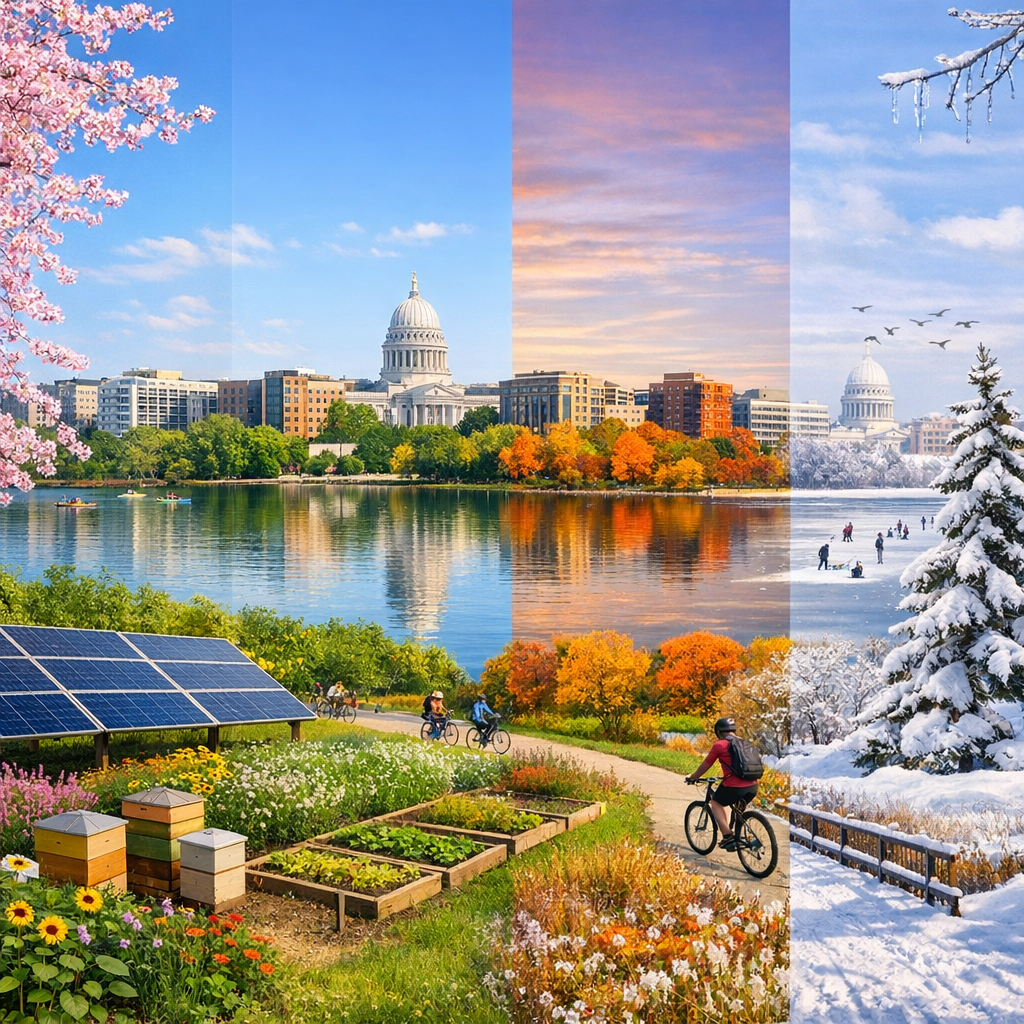
Madison, Wisconsin, experiences a Humid Continental climate, characterized by four distinct seasons, each offering unique weather patterns and opportunities for residents and visitors alike.
Seasonal Overview
Spring
Spring in Madison brings a gradual warming trend. Average high temperatures increase from 43.2°F (6.2°C) in March to 68.9°F (20.5°C) in May. This season also sees a rise in precipitation, with May averaging 4.42 inches (112.27 mm) of rainfall. The blooming flora and milder temperatures make it an ideal time for outdoor activities.
Summer
Summers are warm and humid, with average highs peaking at 82°F (27.8°C) in July. Rainfall is relatively consistent, with July receiving about 4.5 inches (114.3 mm). The extended daylight hours and warm temperatures provide ample opportunities for enjoying Madison’s lakes and parks.
Autumn
Autumn is marked by cooler temperatures and vibrant foliage. Average highs decrease from 73.1°F (22.8°C) in September to 60.3°F (15.7°C) in October. Precipitation averages around 2.88 inches (73.15 mm) in October, making it a comfortable season for outdoor events and activities.
Winter
Winters are cold and snowy, with average highs of 27.1°F (-2.7°C) in January. Snowfall is common, contributing to the city’s picturesque winter landscapes. Residents often engage in winter sports and activities during this season.
Environmental Initiatives
Recognizing the challenges posed by climate change, Madison has implemented several initiatives to promote sustainability and environmental resilience.
City of Madison’s Climate Commitment
The City of Madison aims to achieve 100% renewable energy and net-zero carbon emissions for city operations by 2030, and community-wide by 2050. The city’s Sustainability Plan outlines 24 goals to reach these targets, improve resilience, and grow the green economy. Learn more.
University of Wisconsin–Madison’s Sustainability Goals
UW–Madison has set ambitious sustainability goals, including achieving net-zero emissions by 2048 and procuring 100% renewable electricity on campus by 2030. The university is also working towards creating a zero-waste campus by 2040. Learn more.
Zero Waste Initiatives
The city is actively working to create a circular economy by keeping materials, products, and services in circulation for as long as possible. This approach aims to reduce greenhouse gas emissions, protect the environment, and advance environmental justice. Learn more.
Understanding Madison’s climate patterns and supporting local environmental initiatives are essential steps toward fostering a sustainable and resilient community.