

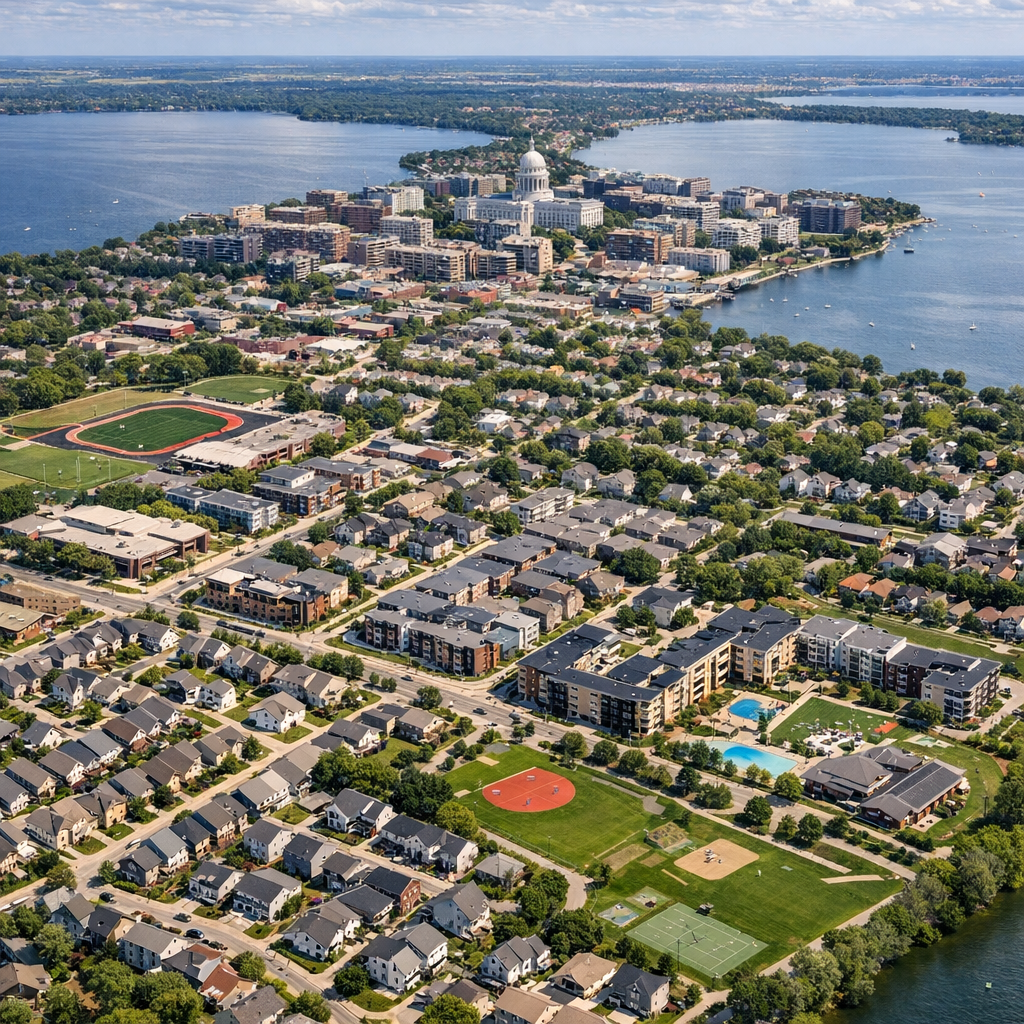
Madison has been actively pursuing initiatives to address housing challenges, focusing on increasing affordability and availability. In June 2025, Mayor Satya Rhodes-Conway, alongside members of the Common Council and various community organizations, introduced proposals under the Housing Forward initiative. These proposals aim to facilitate the construction of smaller, more affordable homes by allowing two units of housing on any residential lot that currently permits single-family homes citywide. This change is intended to support the creation of more duplexes and homeownership opportunities. [Source]
In September 2025, the city unveiled additional efforts to create more housing. These initiatives include making it easier to build smaller, more affordable homes and simplifying the permitting process to create more housing opportunities across Madison. The proposals have garnered support from a broad coalition of community groups, including 1,000 Friends of Wisconsin, AARP Wisconsin, Centro Hispano, and the Urban League of Greater Madison. [Source]
Despite these efforts, challenges persist. The 2025 Housing Snapshot Report indicates that Madison has seen 20,000 new residents since 2020, making it the fastest-growing city in Wisconsin. This rapid growth has added pressure on the housing supply, raising concerns about affordability and accessibility. [Source]
Community members have also voiced concerns about housing conditions and landlord practices. In March 2024, the Equal Opportunities Commission hosted a meeting on Madison’s North Side to address issues such as lack of record-keeping by property companies, untimely maintenance, and frequent management changes. Residents highlighted difficulties in providing proof of rental history and on-time payments, complicating efforts to find new housing. [Source]
As Madison continues to implement housing initiatives, ongoing community engagement and monitoring will be essential to ensure that the city’s growth is inclusive and that housing remains accessible and affordable for all residents.