

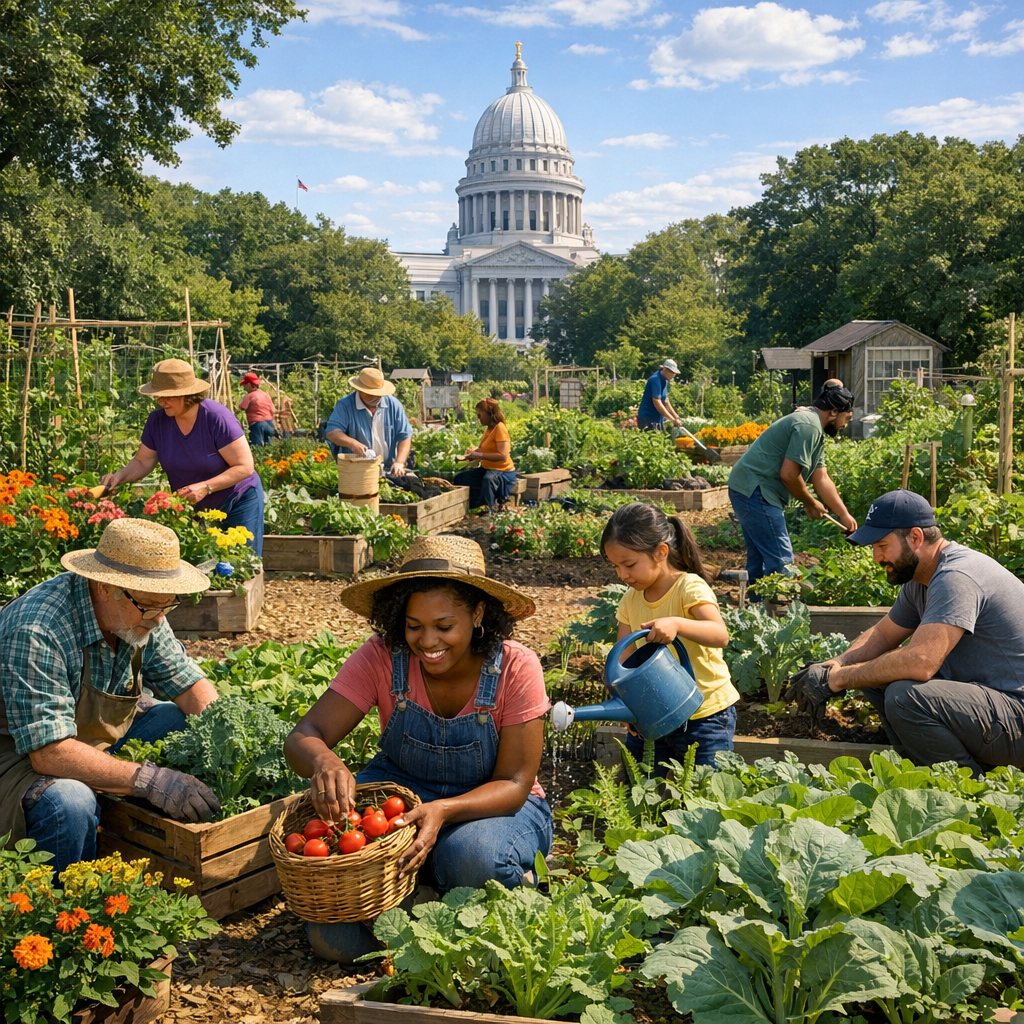
In the heart of Madison, community gardens have blossomed into vibrant spaces that do more than just produce fresh vegetables—they cultivate connections, promote sustainability, and enhance local food security. These gardens serve as communal hubs where residents from diverse backgrounds come together, sharing not only land but also knowledge, culture, and a collective commitment to nurturing both plants and relationships.
The Roots of Community Gardening in Madison
Madison’s commitment to community gardening is evident in its support for numerous gardens across the city. The City of Madison recognizes that these spaces increase access to safe, healthy, and culturally appropriate food, provide accessible public areas that boost social connectedness, and assure safe land for individuals to grow food. This initiative is a collaborative effort involving various city departments, including the Parks Department, Streets Department, Public Health Madison and Dane County, Community Development Division, and the Mayor’s Office.
Spotlight on Local Gardens
Several community gardens stand out for their contributions to Madison’s neighborhoods:
Quann Community Garden
Established in 2002, Quann Community Garden offers approximately 140 plots to local residents. Located at the southwest corner of Quann Park, the garden provides water stations throughout and plots measuring about 20 by 22 feet. The garden operates on a sliding fee scale, ensuring affordability for all participants.
Crowley Station Community Garden
Situated atop city well #17 in downtown Madison, Crowley Station Community Garden features raised beds within the Lakefront Porch Park. Operating on a cooperative model, gardeners collectively manage and maintain the space, fostering a strong sense of community among urban residents.
Midvale Community Garden
As Madison’s oldest community garden, Midvale Community Garden has a rich history of serving the west side community. Located next to Midvale Elementary School, it continues to be a cherished space for local gardeners.
Reindahl Community Garden
Located on the east side of Madison in Reindahl Park, this garden boasts 260 plots, each approximately 20 by 20 feet. With both tilled and no-till options, gardeners can choose plots that suit their preferences, including the opportunity to grow perennials.
Brittingham Community Garden
Established in 2013, Brittingham Community Garden is a diverse space located in Brittingham Park near the bike path. It serves a wide range of community members and benefits from partnerships with organizations like Rooted, Freedom Inc., and the Bayview Foundation.
Eagle Heights Community Gardens
Recognized as one of the oldest and largest community gardens in the United States, Eagle Heights Gardens offers plots to the University of Wisconsin and Madison communities. Gardeners from around the world bring diverse agricultural traditions, creating a rich tapestry of global gardening practices.
Beyond Gardening: Building Community and Sustainability
These gardens are more than just places to grow food. They are platforms for education, cultural exchange, and environmental stewardship. For instance, the Capitol Vegetable Garden, managed by Rooted and its partners, serves as a demonstration garden showcasing the beauty and diversity of food grown by Madison gardeners. Similarly, the Madison Christian Community Garden not only provides space for individual plots but also includes a food pantry garden that supplies thousands of pounds of produce to local food pantries annually.
Community gardens in Madison also play a role in promoting sustainability. By encouraging local food production, they reduce the carbon footprint associated with transporting food over long distances. Additionally, these gardens often incorporate sustainable practices such as composting, rainwater harvesting, and organic gardening methods.
Getting Involved
For those interested in joining a community garden, many offer opportunities for new members. While some gardens have waiting lists due to high demand, others have plots available. Prospective gardeners are encouraged to reach out directly to the gardens or visit their websites for more information on registration and participation.
In conclusion, Madison’s community gardens are thriving examples of how shared green spaces can strengthen neighborhoods, promote sustainability, and enhance food security. They remind us that by working together, we can cultivate not only plants but also a more connected and resilient community.